
Five Cabling Practices That Prevent Major Delays in Data Centre Projects

In large ICT and data centre projects, delays often come from issues that are not immediately visible. Cabling is deeply connected to mechanical, electrical, and commissioning activities, which means even small oversights can slow progress for the entire programme.
The good news is that most cabling-related delays are predictable and preventable. This article highlights five practical measures that keep projects moving, protect quality, and support smooth coordination between trades.
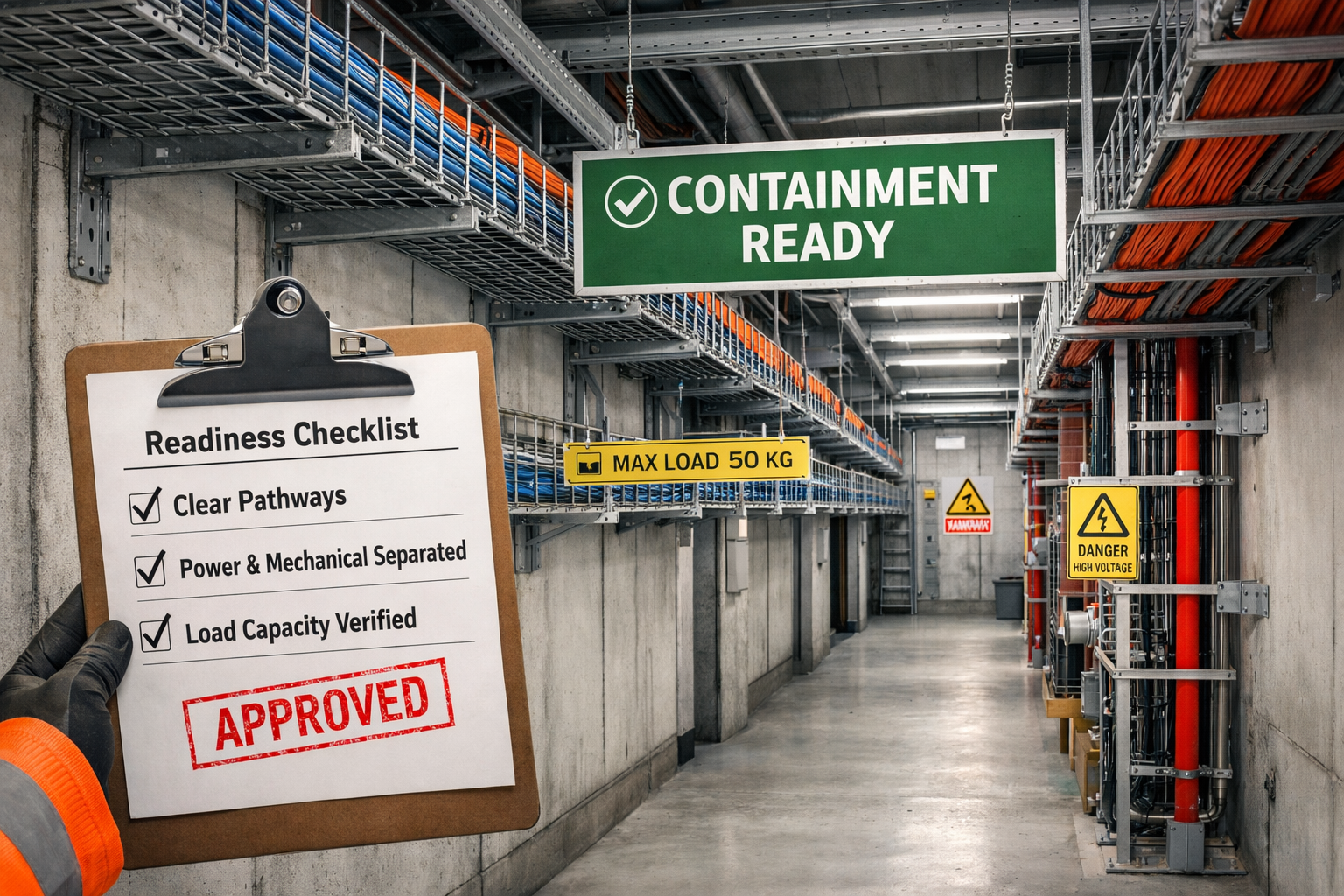
1. Confirming Containment Is Ready Before Teams Mobilise
One of the most effective ways to avoid delays is to ensure containment is complete, accessible, and signed off before cabling teams arrive.
This includes:
- Clear pathways with no obstructions
- Separation from power and mechanical systems
- Verified load capacity and fixings
Mobilising too early leads to rerouting, congestion, and rework. Clear readiness checks prevent this.
2. Aligning Cable Routes With Other Trades Early in the Programme
Mechanical and electrical routes often shift as the project evolves. If cabling paths are not reviewed during these changes, clashes occur.
To prevent delays:
- Update routing plans after every major design change
- Coordinate pathways during site walks
- Confirm access clearances ahead of installation
Consistent cross-trade communication eliminates surprises once installation begins.
3. Planning for Patch Density and Future Access
Racks and cabinets often become congested when patching requirements are underestimated. This slows installation and complicates later testing.
A proactive approach includes:
- Allowing headroom in panel counts
- Designing for access on both sides of the rack
- Planning for future patch additions
Projects that allow for growth avoid lifecycle bottlenecks.
4. Verifying Materials, Tools, and Test Equipment Before Work Starts
Missing components and uncalibrated equipment are small issues that create major delays.
Best practice includes:
- Pre-start material checks
- Verification that test equipment is up to date
- Ensuring labels, fasteners, and accessories are fully stocked
Well-prepared teams complete work efficiently and maintain consistent quality.

5. Keeping Documentation Aligned With Real-Time Progress
Documentation delays often cause installation delays. When drawings, cable schedules, or patching plans are outdated, work slows while teams confirm information.
Reliable documentation practice includes:
- Updating drawings after each change
- Recording patching as it is completed
- Keeping cable schedules consistent with labelling in the field
Accurate documentation supports structured progress and accelerates final testing and handover.
Delays in cabling projects rarely come from the cabling itself. They come from gaps in coordination, planning, readiness, and documentation. By following disciplined practices at each stage of the build, project teams maintain momentum and minimise the risk of unexpected interruptions.

At iCobus, our delivery model focuses on early preparation, cross-trade coordination, and clear documentation, ensuring that cabling supports the wider programme rather than slowing it.