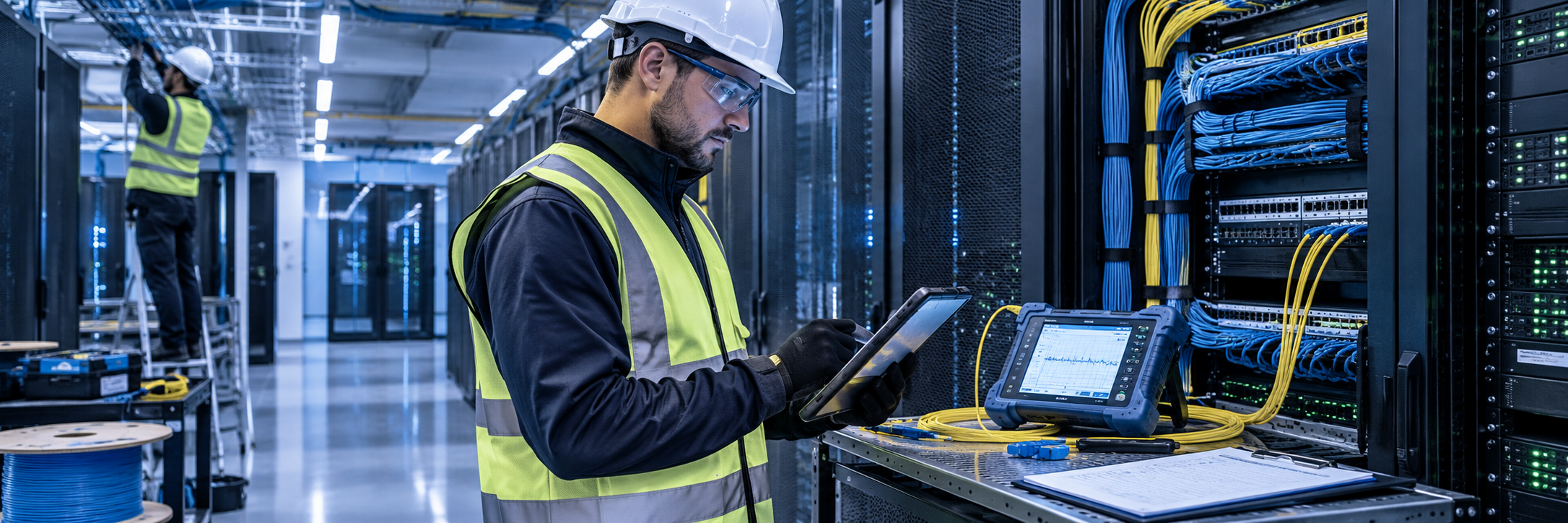
AI-Driven Infrastructure: How Cabling Strategy Will Evolve for Next-Gen Data Centres

AI and automation are reshaping how data centres are designed and built. The change is not only about faster processors or denser hardware, but about how well the underlying cabling infrastructure can handle the data volumes, power demands, and thermal loads these systems create.
Structured cabling is moving from a background utility to a core enabler of performance and scalability. Over the next few years, several clear trends will define how cabling strategies evolve for AI-driven environments.
1. Higher bandwidth and lower latency will set the baseline
AI workloads require massive data transfers between compute nodes and storage systems. To support this, multi-mode fibre such as OM4 and OM5 and high-performance Cat6a or Cat8 copper will become essential for maintaining low-latency, high-speed connectivity. The focus will shift toward designing link paths that minimise loss and future-proof the network.
2. Power and cooling constraints will shape cabling routes
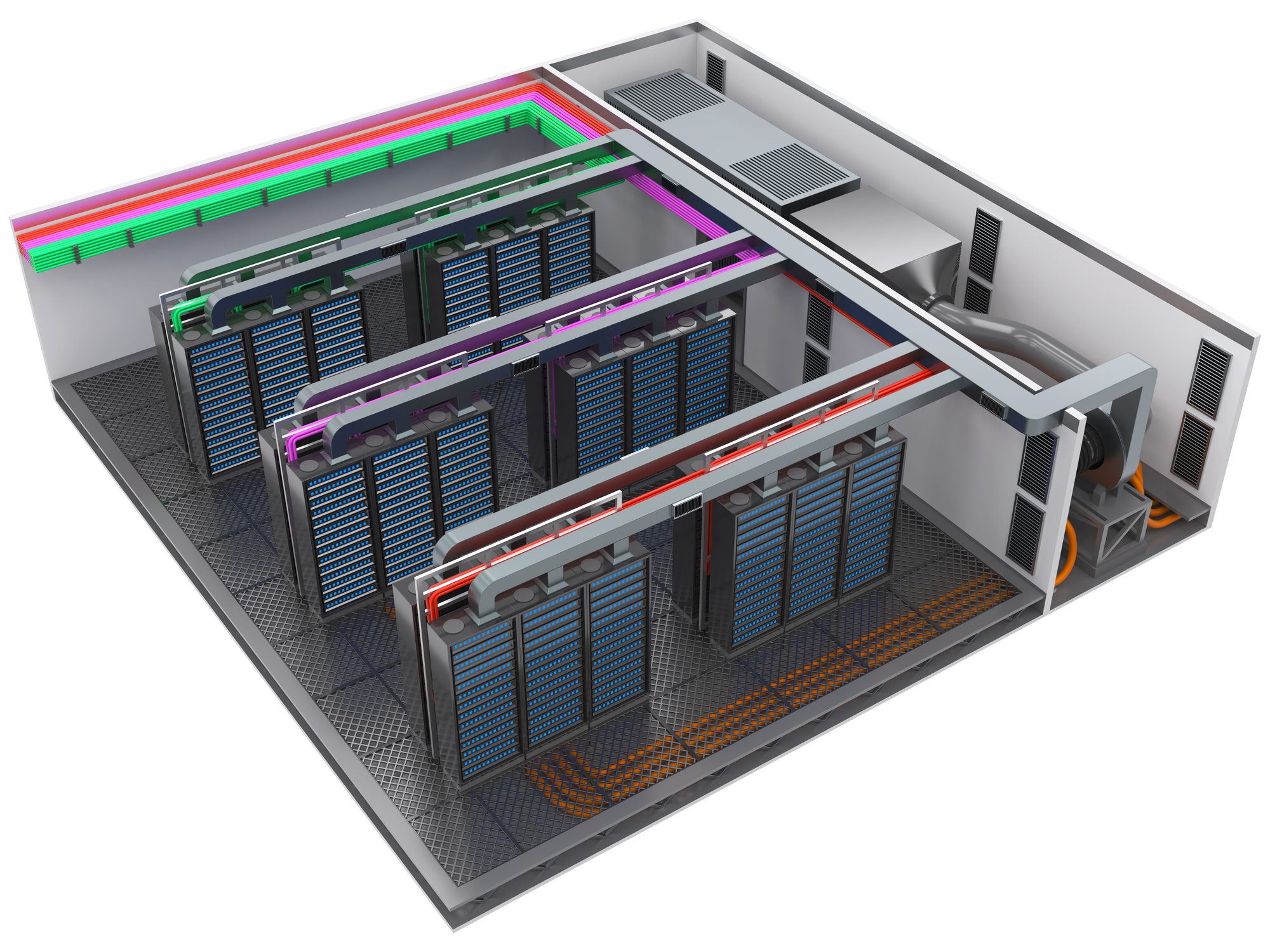
AI servers draw significantly higher power than traditional hardware, which increases heat output. Cabling layouts will need to evolve around more complex airflow patterns and containment systems. Expect more segregated pathways, underfloor cooling integration, and materials rated for higher ambient temperatures.
3. Smarter cable management will drive operational efficiency
As rack densities increase, the ability to service or upgrade systems without downtime will depend on structured cable routing, clear labelling, and accessible patching. Intelligent cable management systems that monitor utilisation and temperature will likely see wider adoption to improve both reliability and maintenance.
4. Testing and verification will become more data-driven
At higher transmission speeds, even minor inconsistencies can affect performance. Testing will shift from one-time certification to continuous monitoring using automated diagnostic tools. Real-time test reporting and predictive fault detection are expected to become standard practice in large-scale facilities.
5. Fibre growth will accelerate, but copper will retain key roles
Fibre will continue to dominate backbone and high-bandwidth interconnects, while copper will remain vital for shorter, power-efficient links. Hybrid infrastructures that combine both will become the norm, balancing performance, cost, and flexibility.
6. Flexibility and modularity will define future design

As AI architectures evolve, cabling systems will need to adapt quickly. Modular containment, quick-connect fibre panels, and pre-terminated assemblies will enable faster scaling and simpler reconfiguration as new technologies emerge.
7. Collaboration between disciplines will increase
Cabling design will continue to move closer to the core of mechanical and electrical planning. Expect greater integration between ICT, electrical, and cooling teams during early project stages to ensure performance goals are met across the entire environment.
AI is changing how data centres are planned, but the foundation remains the same: a reliable, scalable cabling network that can handle tomorrow’s demand. The companies that invest now in forward-looking infrastructure will be ready for the next generation of computing, where performance and adaptability are no longer optional but expected.

Get in touch today to discuss your next project.